


Cast iron floor track
Contact Info
- Add:, Zip: 061000
- Contact: 谢佳宁
- Tel:15350773479
- Email:3622313939@qq.com
Other Products


What are the installation technical requirements and standards for cast iron ground rails?
The density of the coating for cast iron ground rail casting can be measured using the graduated cylinder weighing method or with a Baumé hydrometer. However, the reading of the Baumé hydrometer is significantly affected by the viscosity of the coating. In the production of cast iron ground rails, No. 4 and No. 1 viscosity cups are commonly used to measure the conditional viscosity of the coating. The purpose of measuring viscosity is to control the brushability of the coating and the thickness of the layer that penetrates the surface of the sand mold and sand core.
If an excessive amount of molten metal flows over a certain surface of the cast iron ground rail mold cavity, it can heat the mold surface to a destructive extent. If the initially solidified shell in the mold cavity is later infiltrated by incoming metal, sand adhesion becomes severe. During the pouring of cast iron ground rails, any factor that causes excessively high pressure in the molten metal may lead to mechanical sand adhesion in the castings.
The general causes of these issues in cast iron ground rail sandboxes are as follows: Improper placement of the box bars hinders the ramming of certain recessed areas, resulting in localized soft spots in the cast iron ground rail sand mold, which causes mold expansion or 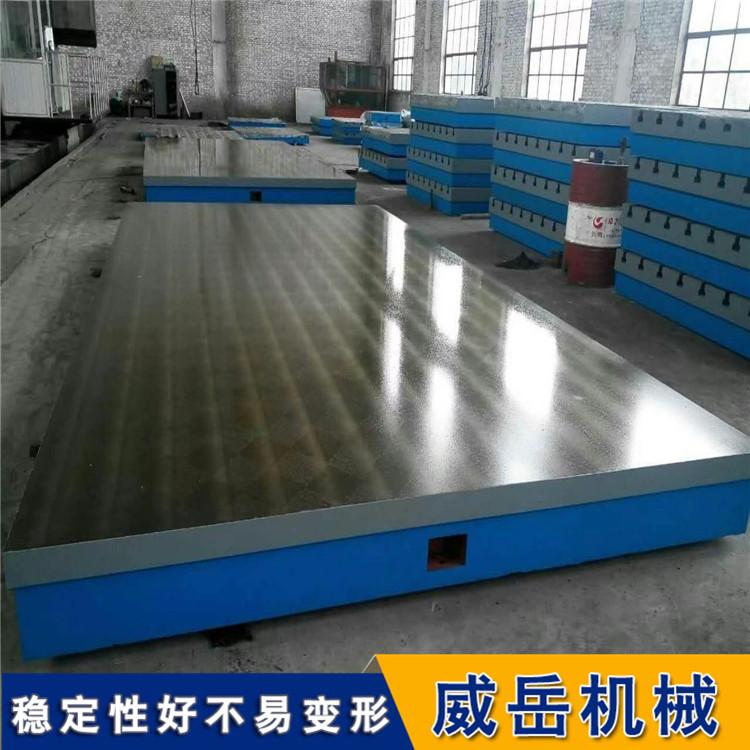 mechanical sand adhesion. Inadequate ramming due to the cast iron ground rail sandbox being too small.
An oversized riser neck in cast iron ground rails will cause overheating of the surrounding molding sand. This is a common issue, often due to an excessively long riser neck. To prevent premature solidification of the molten metal, the neck size must be increased. If improper riser neck design results in inadequate feeding, shortening the riser neck can prevent solidification issues. A smaller riser neck reduces the heat exposure of the sand mold. Improper design of the pouring cup or sprue can lead to air entrainment during pouring, causing oxidation of the molten metal. This is typically due to turbulence, and the resulting oxide film on the metal surface can cause mechanical sand adhesion.
Sand adhesion in cast iron ground rails, also known as metal penetration sand adhesion, occurs when molten metal or metal oxides infiltrate the gaps between sand grains on the mold surface through capillary or vapor-phase penetration. Typical examples include: The sprue or riser being too close to the mold surface, creating a hot spot. If the sand in this area is not properly rammed, mechanical sand adhesion can become severe.
Coating density for cast iron ground rails: The density of the casting coating reflects the solid particle content in the coating. If the coating density is too low, the thickness formed on the surface of the sand mold and sand core during each application is insufficient, making it difficult to provide adequate protection. Therefore, generally, a higher density is better for cast iron ground rail coatings. However, density should not be excessively high, as it can make coating application difficult, leading to uneven coating surfaces, localized accumulation, and other issues that may affect casting quality.
Alloys containing low-melting-point components, such as lead in lead bronze, can easily cause mechanical sand adhesion in cast iron ground rails because lead remains fluid at temperatures much lower than the base metal. Alloys that require high-temperature pouring are prone to mechanical sand adhesion due to their good fluidity. Additionally, high pouring temperatures accelerate oxide formation, increasing the tendency for mechanical sand adhesion in cast iron ground rails.
Precision: According to standard metrological verification procedures, the precision is classified into Grade 1. The overall flatness typically varies by 0.05–0.1 mm, which is based on a 600 mm plane. Material of cast iron ground rails: High-strength cast iron HT200-300 with a working surface hardness of HB170-240. After two artificial treatments (artificial annealing at 600–700°C and natural aging for 2–3 years), the precision remains stable, and wear resistance is excellent. Cast iron ground rails for aluminum profiles are sometimes used in conjunction with assembly lines and are inevitably subjected to impact forces. The supporting frames must be sturdy.
Weiyue Machinery, Ms. Xie, 15350773479
| Industry Category | Hardware & Tools/Castings/Iron Castings |
|---|---|
| Product Category | |
| Brand: | 威岳 |
| Spec: | 2000*4000 |
| Origin: | 111309 |


